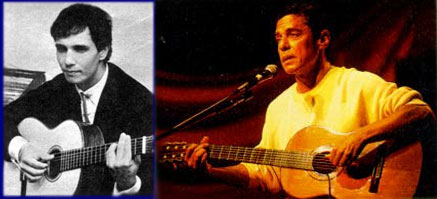
Roberto Carlos, central figure of the Jovem Guarda, and Chico Buarque, central figure of MPB
For tropicalismo, the imitation of other stles required an understanding of the elements that were used to speak directly to the public. Although the tropicalistas looked towards the past, they also paid attention to what was going on at the moment of tropicalismo's creation. To understand what tropicalismo did with Brazilian music, it is important to know that the Beatles impacted the cultural movements of Brazil with the same force as in other places in the world. While neither Caetano Veloso nor Gilberto Gil knew their music very well, they respected the way the Beatles transformed popular music to make possible a way of seeing the commercial as an authentic expression of the ideas of musicians and the public, instead of only a way to sell more albums to the entire world (Veloso 103). As Veloso states, the tropicalistas did not want to imitate their style of music, rather their attitude towards the phenomenon of popular music (103). In this way,tropicalismo recognized the potential of connecting to the public, including the masses, with popular music that contained an ideology from the cultura of intellectuals, not the culture of consumption.
At the same time that they looked at the Beatles, the musical movements of Brazil attracted the attention of the tropicalistas. Since bossa nova continued to be important for all of Brazil, MPB (música popular brasileira) was in the process of developing a type of music that appeared to be a second generation of bossa nova. In general, MPB was interested in maintaining the sophisitacion of Brazilian music with poetic notions expressed by its words. In this way, MPB reacted to popular foreign music--seen as another form of cultural imperialism--and emphasized the authority of Brazilian culture. However, tropicalismo saw this way of producing music as a step backwards because it lacked the essential innovation that could establish Brazilian music on the international scene (Dunn 57). At the same time, tropicalismo respected MPB's relationship with the protests of what was occurring in the politics of the country.
During this same moment, the more commercial side of Brazilian music was represented by rock, which was a departure from the sophisitcation of bossa nova. Brazilian rock was known as iê-iê-iê (a reference to "yeah yeah yeah"of the song "She Loves You" by the Beatles) and concetrated on the imitation of known styles of foreign rock (Dunn 58). The Brazilian rock movement expressed its style of music on television with the program of TV Record called Jovem Guarda, which showed rock's important figures and attracted working class and middle class people from the city (Dunn 59). This music, instead of criticizing society and Brazilian politics, attempted to confront conservative ideology to focus on everyday desires of its public (Dunn 61).
For tropicalismo, aboth movements made sense for the evolution of Brazilian music. Within the tension between the contemporary styles of Brazilian music, tropicalismo found a way of respecting the refined elements of its musical predecessors and of understanding the importance of convincing the public of the validity and relevance of its music and its message.